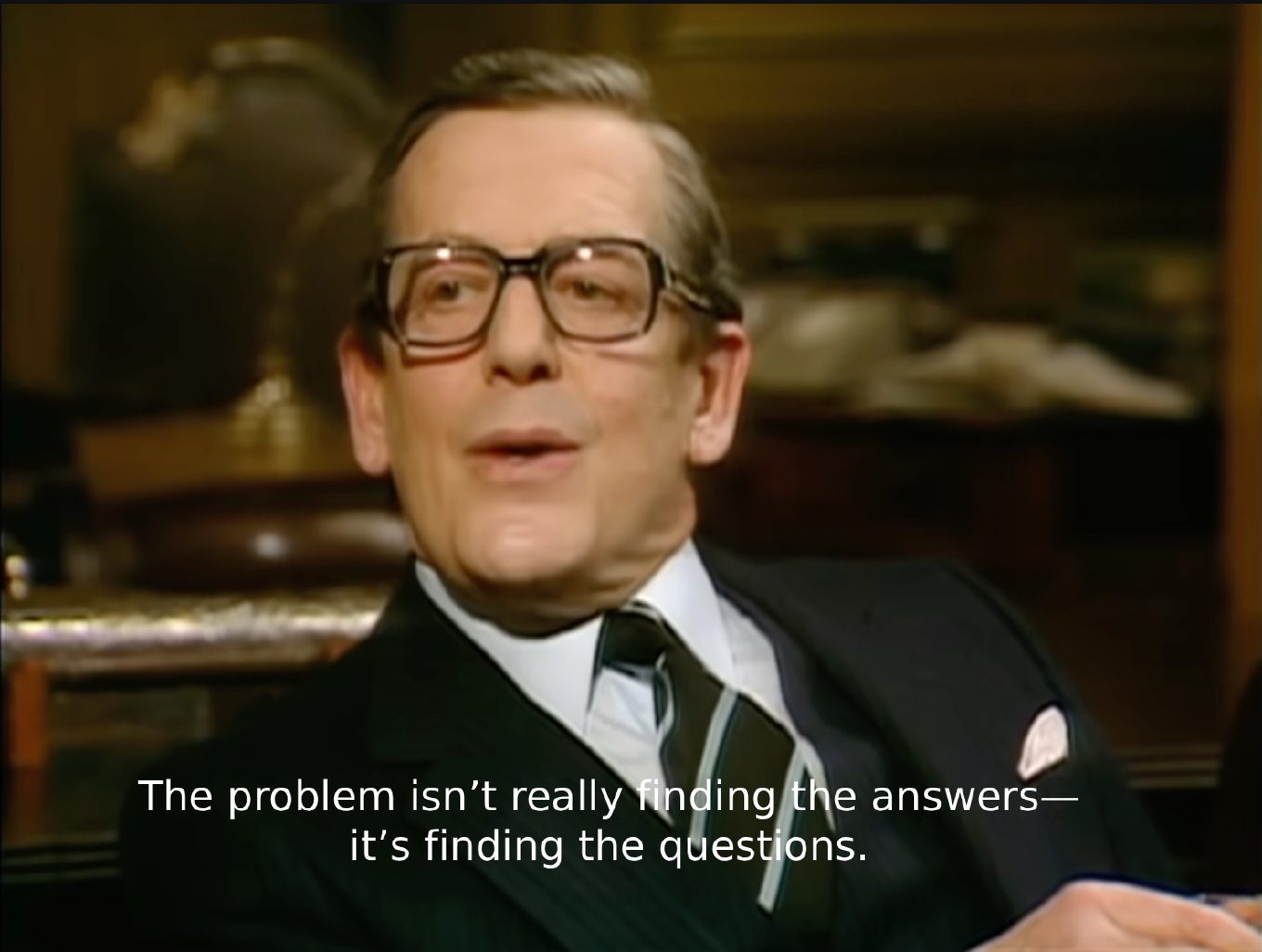
— Sir Arnold, Yes Minister, “Party Games”
In the summer of 2014, on the morning we went back to school to collect the answer keys after the gaokao — China’s college entrance exam — I wrote the first post of my old blog: What We Lose This Summer. At the end of it, my eighteen-year-old self made a wish: “I have no grand ambitions. I only wish that ten years from now, I will not have become someone I despise.”
Twelve years on, looking back, I’d say the wish came true. Rereading what I wrote then, I feel hardly any distance from it — it could have been yesterday. It seems my core hasn’t changed: I never became one hundred percent the self I imagined, but at least I didn’t turn cynical or slick. If anything, I have more energy and vitality than I did back then, and I look forward to the future more. Most people are set in their ways by this age; I feel I’m still growing — that life is only just beginning. AI has dissolved all of my inner friction, to the point where I feel a life without AI would not be worth living.
In between, I’ve moved house several times, and this time the blog I started in high school is moving with me. I’m writing this now because my circumstances have looped back to where they were twelve years ago: I’m in a gap, exactly like the one after the gaokao — there are no excuses left not to immediately do what I long to do.
I’ve found that the problems a person truly needs to solve in a lifetime number only a few. Yet most people, most of the time, pay them little attention. The old tale of the man who bought the ornate casket and handed back the pearl inside isn’t just a fable; chasing the trivial and neglecting the essential is simply how the world runs.
You may notice that much of what’s here has to do with AI. That isn’t because I start from “what can AI solve”; it’s that whenever I start from the human side and think about the questions that actually matter, AI keeps offering new angles — and sometimes major progress.
In the country where I was born, meritocracy reigns. People are encouraged to produce ever-more-correct answers, but not permitted to ask questions; and a person is usually judged by nothing but their ability to solve problems. In my mind, the measure of a person should not be how good they are at solving problems, but which problems they choose to solve. If someone is walking the right road, cleverness hardly matters — it only decides whether they find the answer a little sooner or a little later. And someone who has already homed in on the right problems is already happy, not merely on the road to happiness.
So what this garden holds is not conclusions but questions. Conclusions go out of date fast; good questions endure. I will maintain many “living questions” over the long run: why the question matters, which numbers are worth watching over time, where each side currently stands, and my own current view, dated. I don’t assume I have any real insight myself — some of these questions are so deep, or so new, that no one has yet found a reliable answer; others are the eternal questions of a human life. But asking the right questions is, by itself, enough to give a reader something worth their attention.
And the main reason I want to write this blog is to make my voice heard, because I believe I have something to say that can make the world a little better. I see too many people today wanting to learn or use AI out of anxiety — take the popular line: “It won’t be AI that replaces you, but people who know how to use AI.” To my ear, that’s like saying: it won’t be the car that replaces the horse, but a horse that knows how to drive. My own experience is the opposite: we should use AI out of a longing for happiness — and AI really can make us happier. After the car arrived, horses no longer died on battlefields or toiled in harness. The car freed the horse from its labor; it didn’t make the horse do more work, let alone force it to race the car.
The Garden Place in the blog’s name is Yebisu Garden Place — where I first lived when I came to Japan for work after university, and the place where I feel my life truly began. I named this blog Message from Garden Place in the hope that it can be a back garden of thought for you, too.
As it happens, when I first conceived this blog I had no idea that an internet movement called the “digital garden” already existed. Later, while looking for design inspiration for the site, I stumbled upon Maggie Appleton’s history of digital gardens and was struck by how closely her philosophy mirrored mine: an essay is not a disposable thing you publish and abandon, but a plant that needs ongoing tending — some are nascent ideas just sprouting (Seedling), some have taken shape but are still being written (Budding), and some are finished yet still maintained to reflect the latest facts (Evergreen). My blog’s name already has “Garden” in it, so borrowing this terminology to mark each essay’s stage of growth felt like the most natural thing in the world. You’ll see on each page which stage it’s at.
Come back often — even to the same essay — not because revisiting the old reveals the new, but because these essays really do keep being updated. Traditional media is an assembly line: once a piece is published, no one asks whether it was right or wrong. That is media of the printing-press age; media of the information age shouldn’t work that way. This site will be a public knowledge base: every essay is a living entry. Views will change, solutions will change, even the facts will change, so keep an eye on the “last updated” time on the page. Reread an old piece someday and it may not match your memory of it — that isn’t your memory failing; there’s been an update. I’ll manage these revisions with git, because nailing rusted conclusions to the internet and walking away is an irresponsible thing to do.